Early MMA career in Dagestan and combat sambo roots
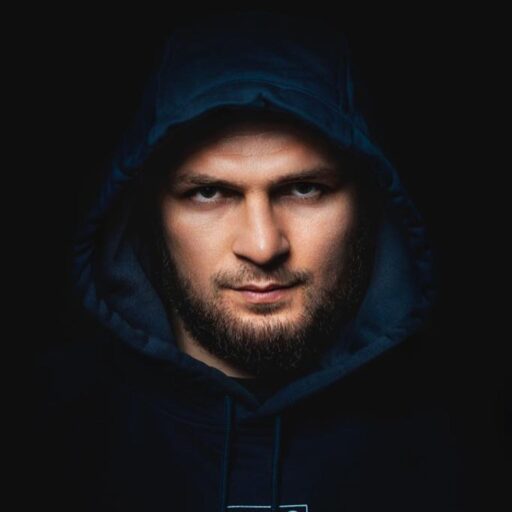
Born on September 20, 1988, in the remote mountainous village of Sildi, Dagestan, Khabib Nurmagomedov was destined for martial arts greatness. Culturally, Dagestan is a crucible for elite combat athletes, and Khabib’s early life was steeped in this martial tradition. Before ever stepping into an MMA cage, he mastered the grueling art of Combat Sambo, eventually becoming a two-time Combat Sambo World Champion.
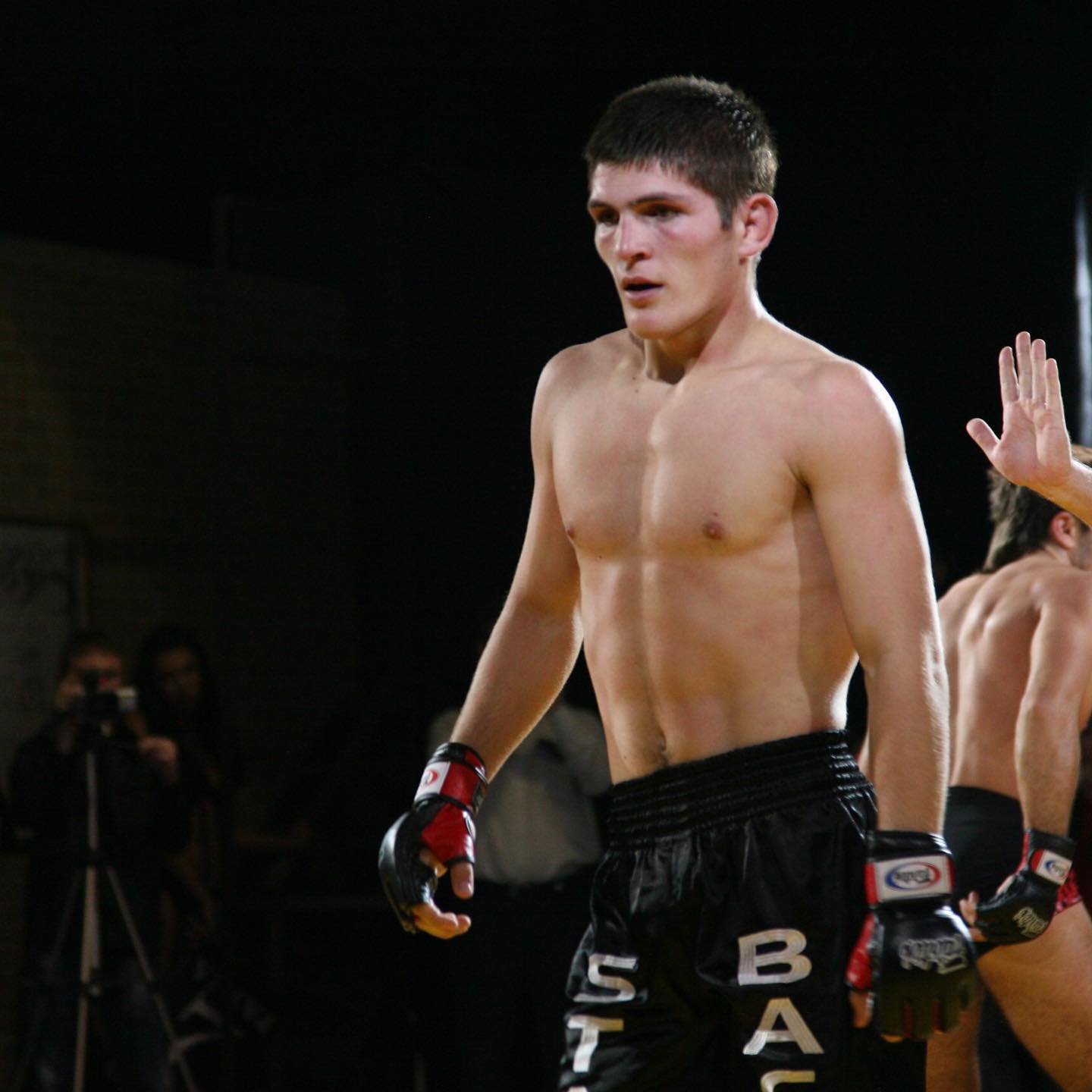
His grappling pedigree was forged on the wrestling mats of Makhachkala, where he famously wrestled a bear cub as a child—a testament to the region’s rugged approach to combat conditioning. The foundational grappling biomechanics he developed during these formative years—specifically his ability to manipulate a moving opponent’s center of gravity—became the bedrock of his legendary 29-0 career.
Father’s Plan and Abdulmanap Nurmagomedov coaching legacy
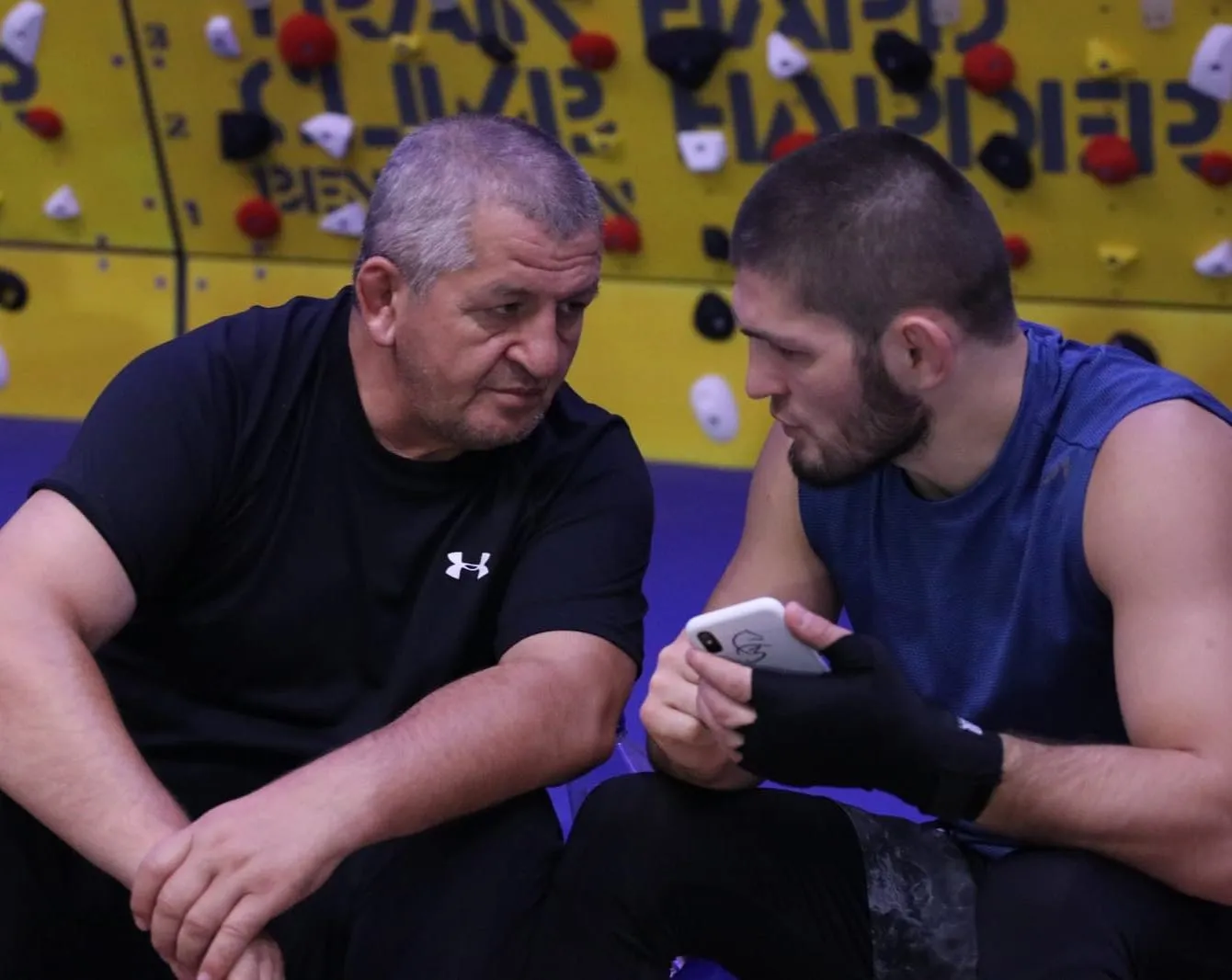
At the core of Khabib’s unrivaled dominance was “Father’s Plan,” the strategic combat philosophy engineered by his late father and lifelong head coach, Abdulmanap Nurmagomedov. Abdulmanap was a decorated combat sambo national coach who instilled a suffocating grappling style focused on positional dominance over reckless damage.
“Father’s Plan” dictated relentless forward pressure, forcing opponents against the cage to neutralize their footwork. Once against the fence, the system relied on single-leg entries transitioning into the “Dagestani Handcuff”—a biomechanical trap where Khabib would secure wrist control behind his opponent’s back, effectively neutralizing their ability to post or defend, leading to exhaustive ground-and-pound.
American Kickboxing Academy Javier Mendez training philosophy
To conquer the UFC, Khabib needed to integrate elite Western kickboxing with his sambo base. This evolution occurred at the American Kickboxing Academy (AKA) in San Jose, California, under the tutelage of head coach Javier Mendez.
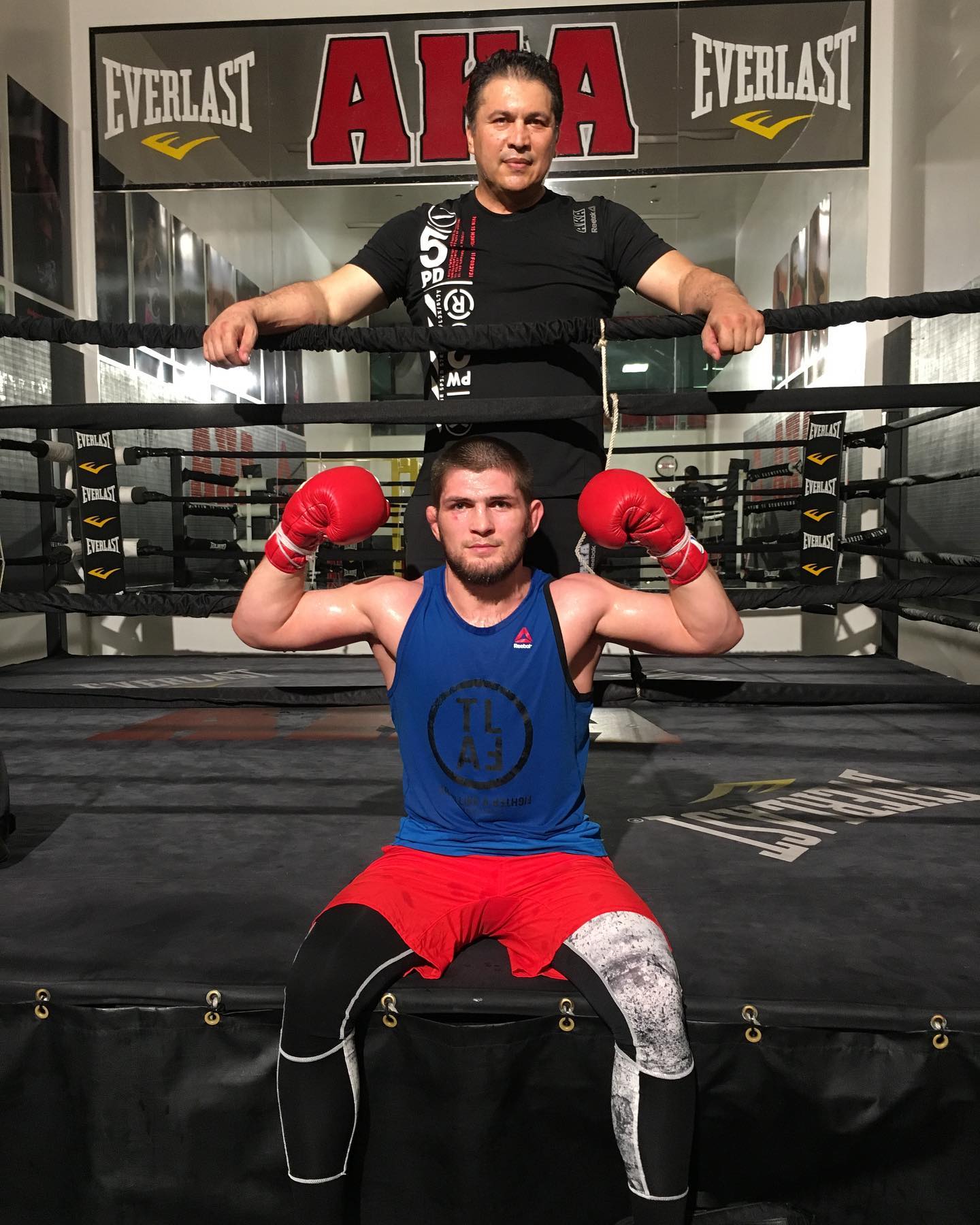
Mendez did not try to turn Khabib into a pure striker; instead, he weaponized Khabib’s striking to facilitate his grappling. The AKA philosophy focused on heavy lead jabs, feints, and uppercuts designed to raise the opponent’s guard, immediately exposing their hips for takedowns. The synergy between Abdulmanap’s mat control and Mendez’s cage-cutting striking strategy forged an unbeatable, hybrid MMA machine.
UFC 160 Abel Trujillo takedown record analysis
Khabib’s historic capability to chain-wrestle was fully unleashed at UFC 160 against Abel Trujillo. In a masterclass of relentless grappling, Khabib set the all-time UFC record with 21 successful takedowns in a single three-round fight.
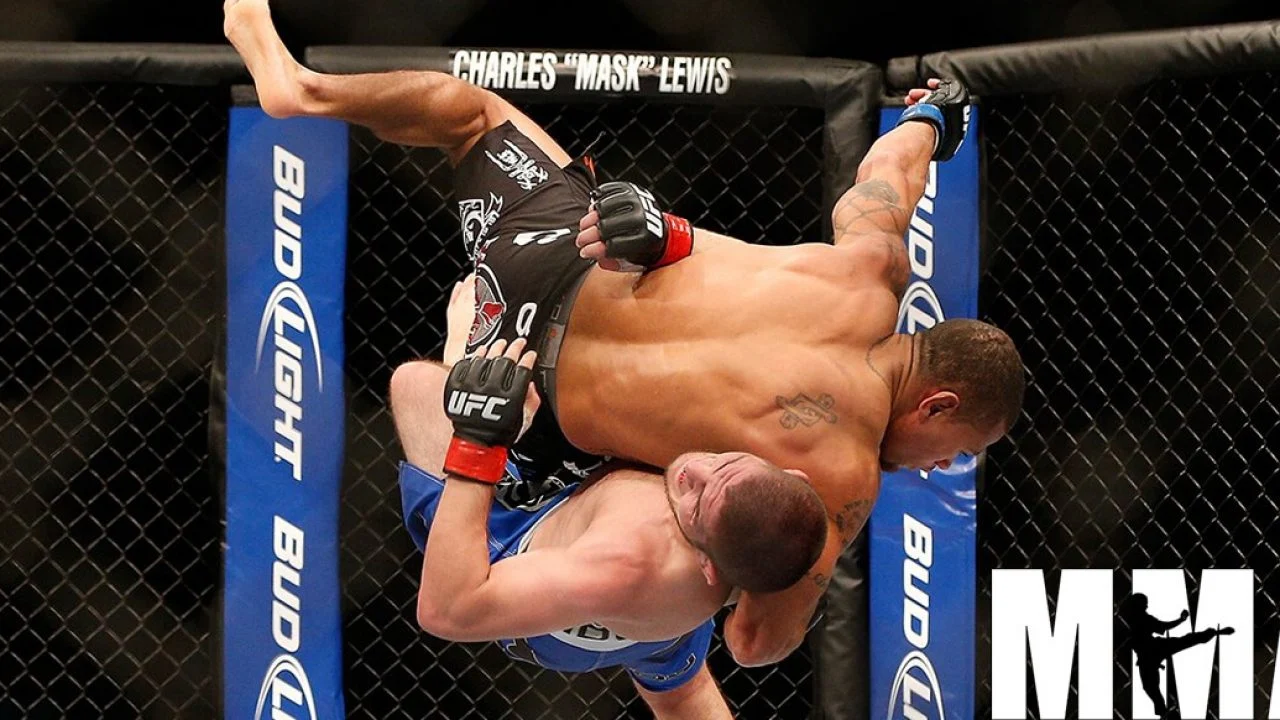
The biomechanical brilliance of this performance lay in Khabib’s kinetic chaining. When Trujillo exploded to defend a single-leg, Khabib seamlessly transitioned his leverage to a double-leg, a body lock, or a judo throw. By constantly shifting the angle of his attacks, Khabib forced Trujillo to carry his body weight continuously, completely draining Trujillo’s anaerobic energy systems.
Khabib vs Edson Barboza 30-25 judges scorecard masterclass
At UFC 219, Khabib faced elite lethal striker Edson Barboza. What transpired was one of the most lopsided beatdowns in UFC history. Barboza, known for his devastating switch kicks, required space to generate torque. Khabib denied him every inch of the Octagon, closing the distance within seconds of each round.
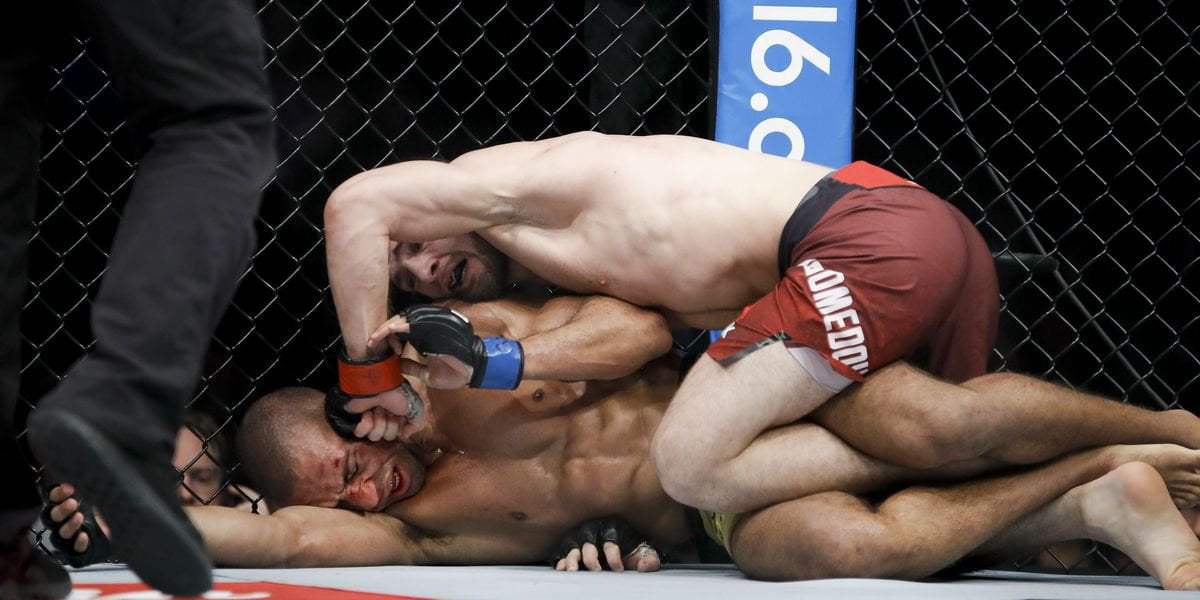
The official judges’ scorecards reflected a historic level of sheer dominance: 30-25, 30-25, and 30-24.
Scoring a 10-8 round in MMA requires overwhelming dominance; scoring multiple 10-8 rounds in a single fight is almost unheard of. Khabib landed 89 significant strikes to Barboza’s 25, utilizing heavy top pressure to smash the Brazilian striker into the canvas for 15 straight minutes.
UFC 223 Al Iaquinta championship fight context
April 2018 brought the most chaotic fight week in UFC history. After a bizarre series of opponent dropouts—ranging from Tony Ferguson to Max Holloway—Khabib eventually faced late-replacement Al Iaquinta for the undisputed UFC Lightweight Championship at UFC 223.
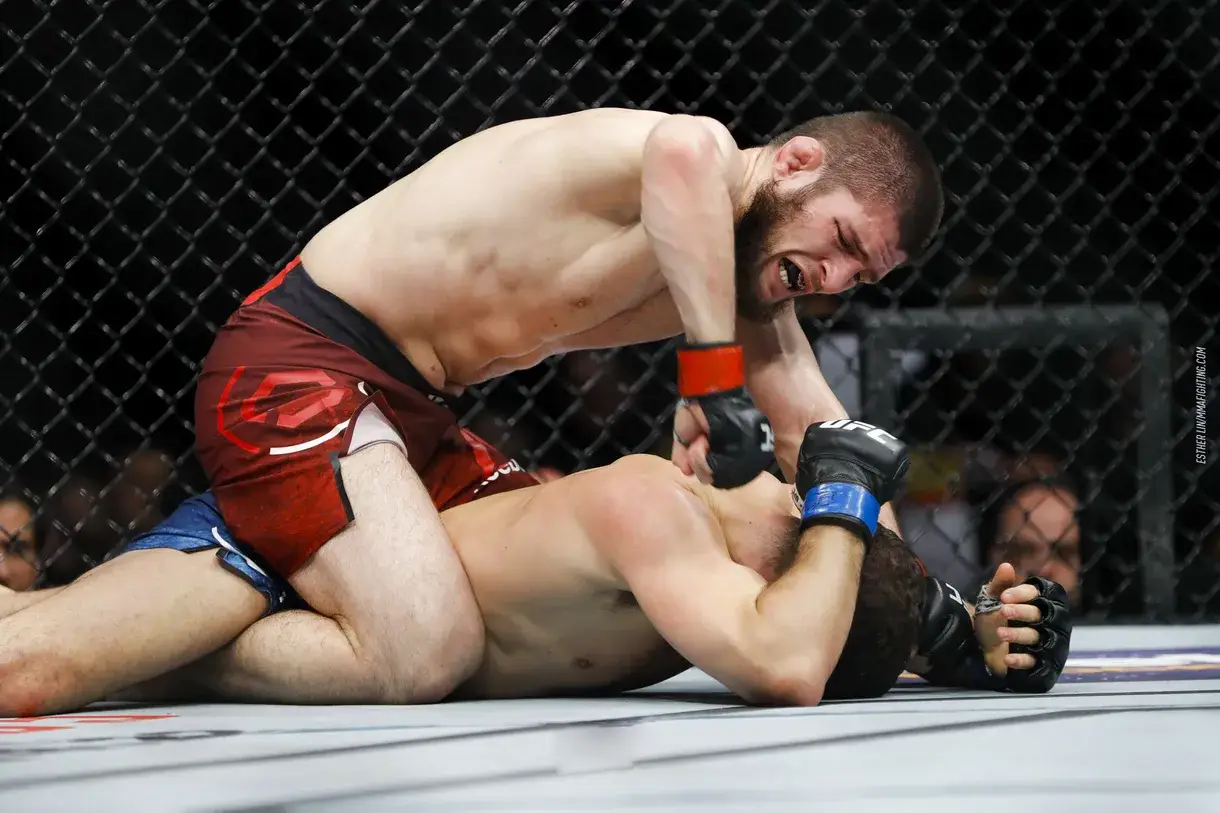
Khabib dominated the fight, notably utilizing a stiff Mendez-taught jab to bloody Iaquinta in the later rounds when the American successfully defended several takedowns. Winning via unanimous decision, Khabib cemented his legacy as the first Russian and first Muslim champion in UFC history, a monumental cultural milestone for the sport.
Khabib vs Conor McGregor UFC 229 neck crank submission
The bitter rivalry culminating at UFC 229 remains the highest-selling pay-per-view in MMA history. Against Conor McGregor, Khabib executed “Father’s Plan” flawlessly. After dropping the elite Irish striker with a thunderous overhand right in the second round, Khabib broke McGregor’s spirit through suffocating top control.
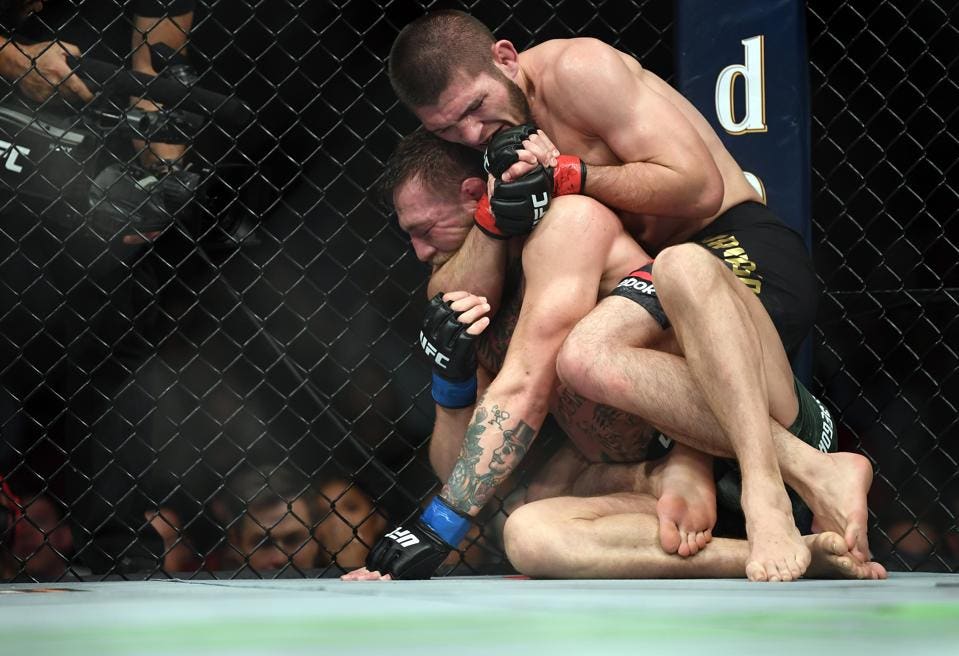
In the 4th round, Khabib secured a neck crank submission, forcing McGregor to tap. Biomechanically, Khabib bypassed the traditional Rear-Naked Choke (RNC) under the chin, opting to apply brutal fulcrum pressure directly across McGregor’s jawline and cervical spine. The sheer torque generated by Khabib’s squeeze made the hold inescapable, cementing his reign atop the 155-pound division.
UFC 242 and UFC 254 lightweight title defense dominance
Following the McGregor victory, Khabib proved his superiority by dismantling two interim champions who possessed vastly different stylistic threats.
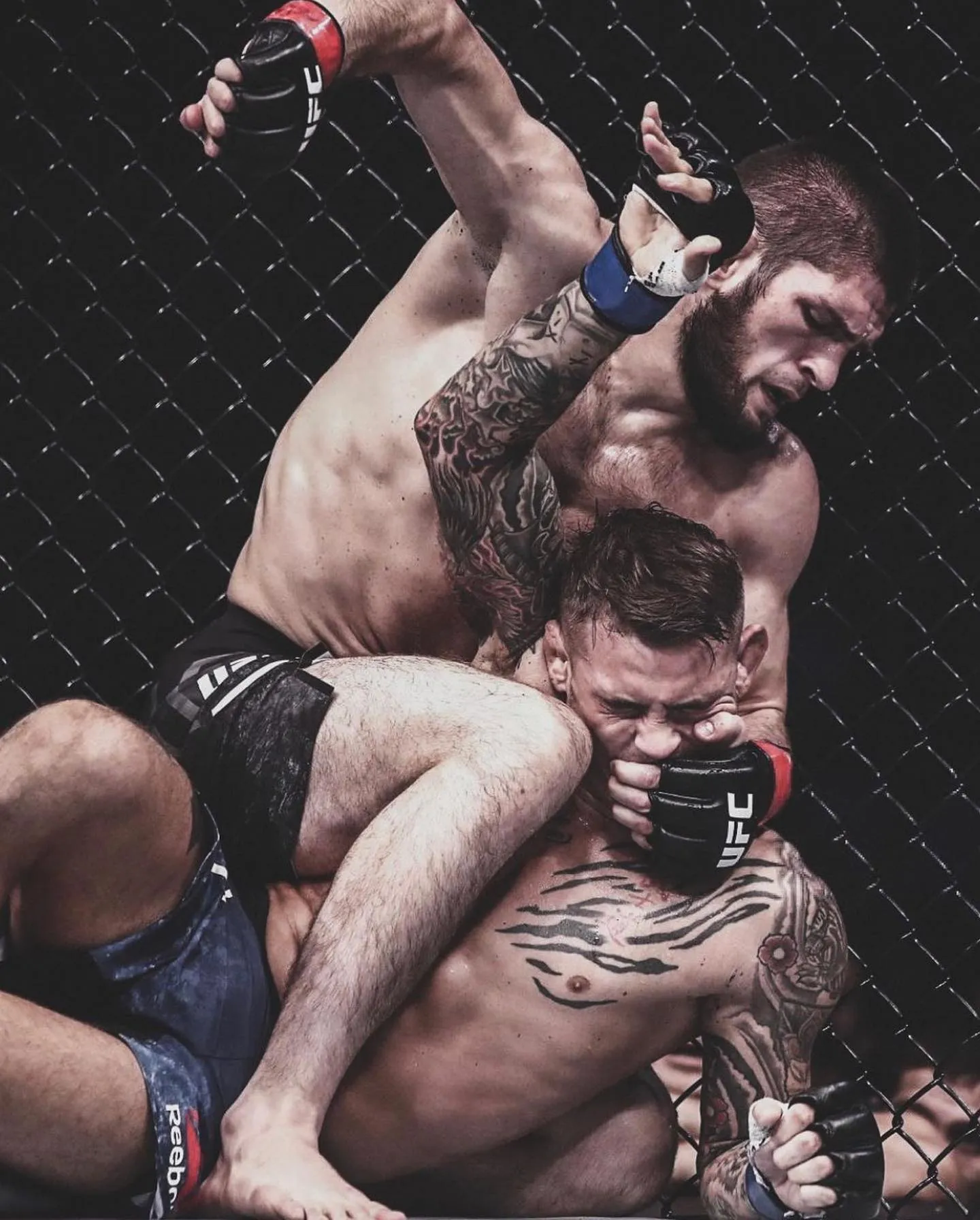
UFC 242 (Dustin Poirier): Fighting in Abu Dhabi, Khabib weathered a deep guillotine choke attempt in the third round. Once he slipped his head out, he transitioned to the back and submitted the elite boxer with a flawless rear-naked choke.
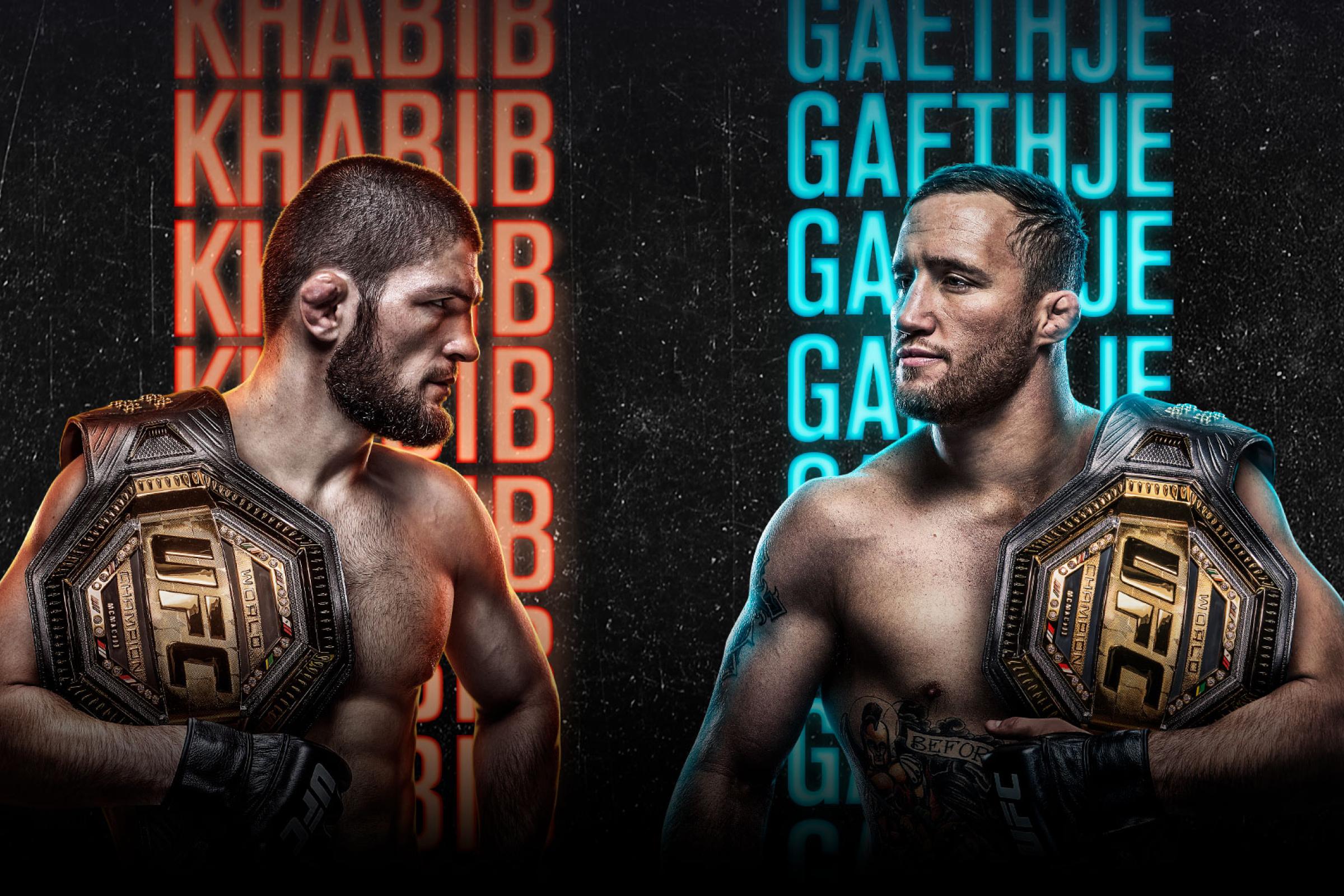
(Justin Gaethje): Facing a Division I All-American wrestler with lethal striking, Khabib marched through Gaethje’s heavy leg kicks. In the second round, he executed a mounted triangle choke, seamlessly transitioning to his back to put Gaethje to sleep.
Khabib Nurmagomedov record 29-0 undefeated streak breakdown
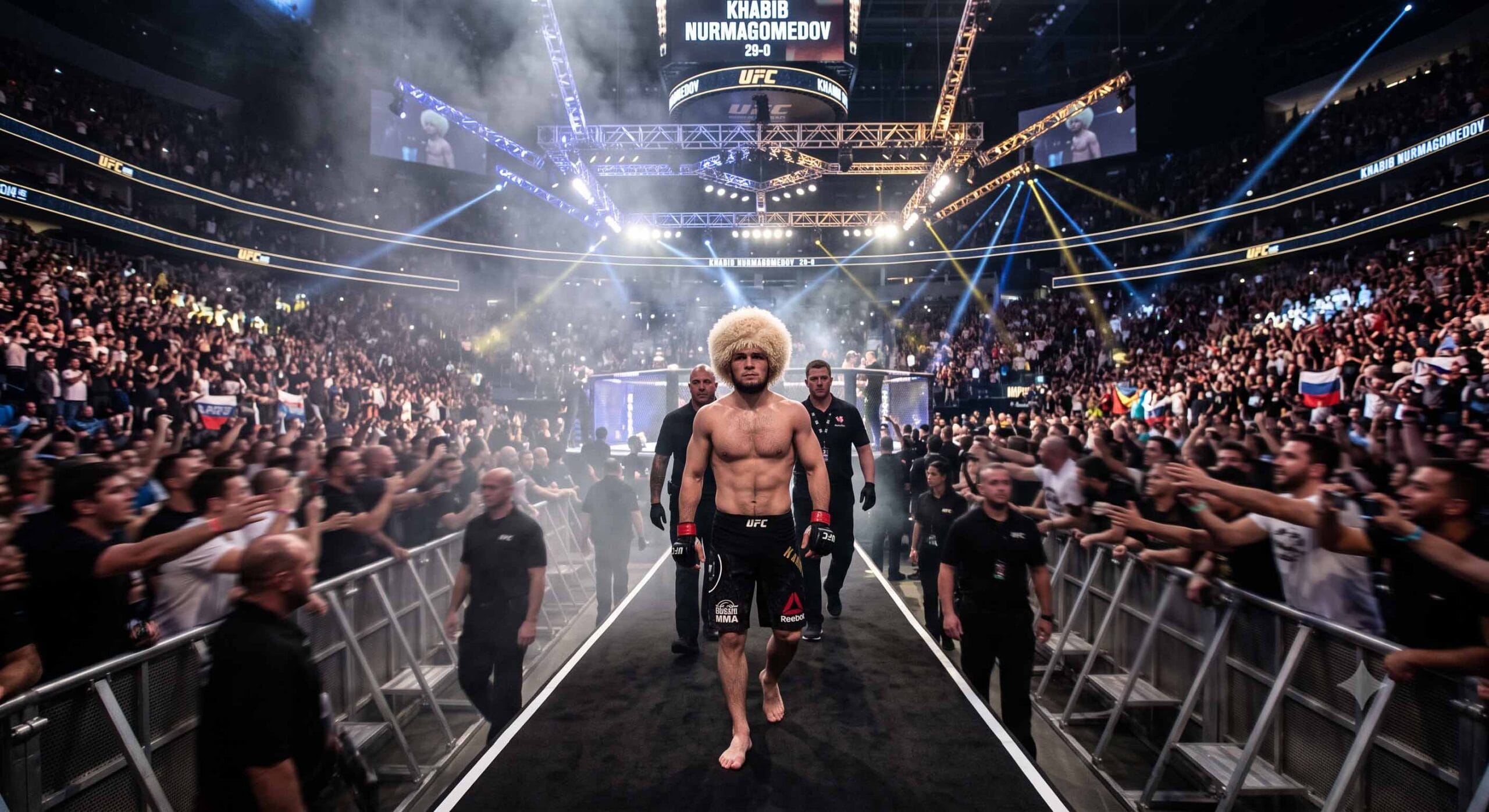
Khabib walked away from the sport with an unblemished 29-0 professional MMA record, a statistical anomaly in a sport defined by volatile outcomes and four-ounce gloves.
| Victory Method | Total Wins | Percentage Breakdown |
| Submissions | 11 | 38% |
| Decisions | 10 | 34% |
| Knockouts (KO/TKO) | 8 | 28% |
| Losses | 0 | 0% |
Khabib Nurmagomedov retirement promise and transition to coaching
Following his submission of Gaethje at UFC 254 in October 2020, Khabib dropped to his knees, weeping in the center of the Octagon. His father, Abdulmanap, had tragically passed away earlier that year due to complications from COVID-19.
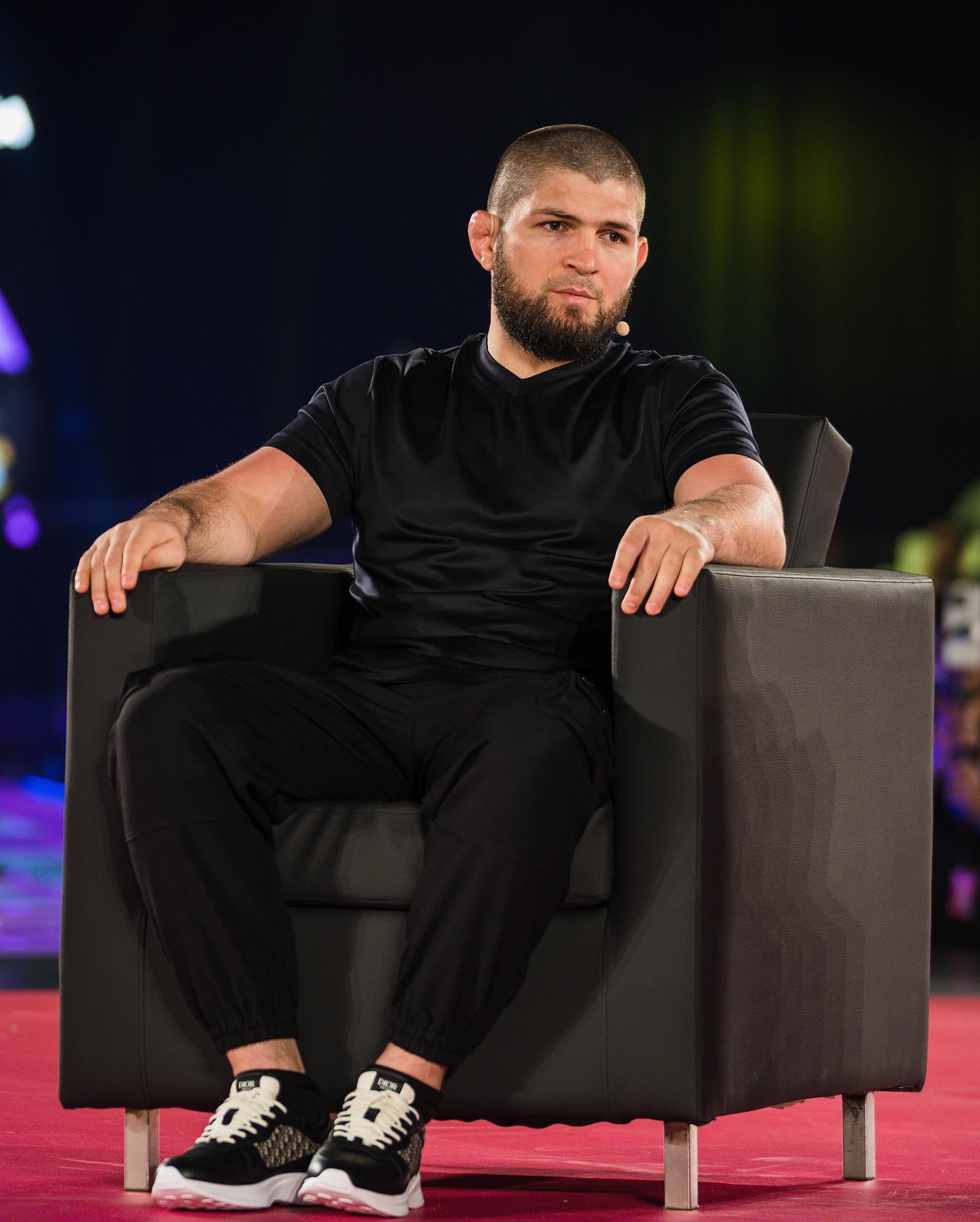
In his post-fight interview, Khabib shocked the world by announcing his retirement. He had made a solemn promise to his mother that he would not compete without his father in his corner. Honoring that promise, he vacated the Lightweight Championship at the absolute peak of his athletic prime and transitioned fully into coaching, vowing to guide the next generation of Dagestani fighters.
Islam Makhachev UFC title reign under Khabib mentorship 2026
Taking up his father’s mantle, Khabib evolved into an elite head coach and tactician. His primary protégé, whom he considers a “brother,” is Islam Makhachev. Under Khabib’s rigorous, standard-setting mentorship, Makhachev captured the UFC Lightweight Championship and has continued an era of absolute dominance through 2025 and 2026.
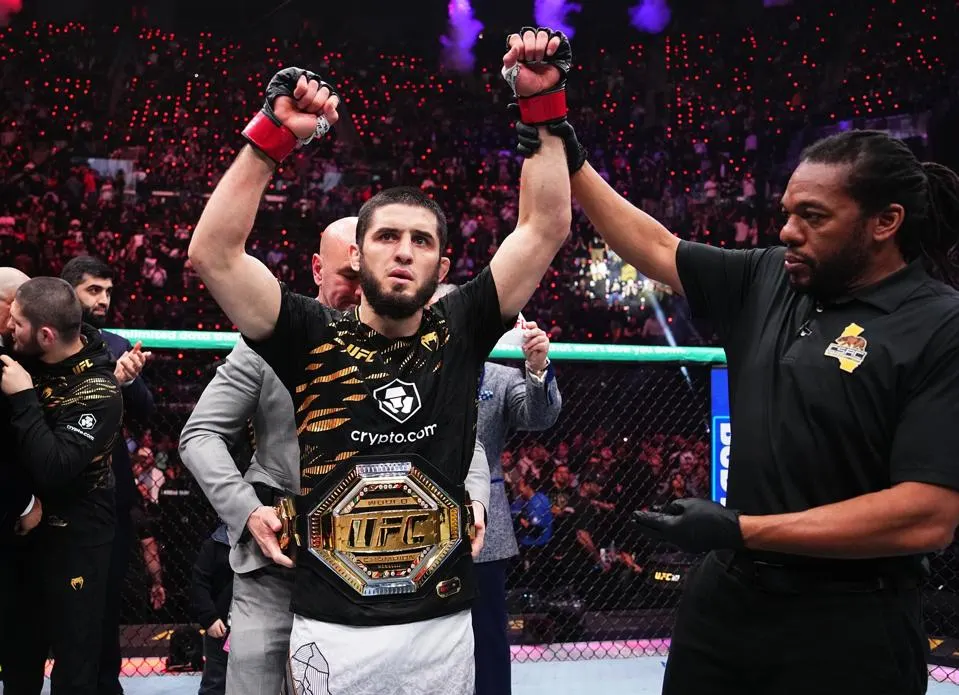
Training footage leading into massive 2026 pay-per-views (such as UFC 330) highlights Khabib pushing Islam through grueling conditioning drills. Khabib’s presence in the gym ensures that the legacy of Abdulmanap’s discipline and tactical perfection remains untarnished, solidifying Team Makhachev as the most feared camp in modern MMA.
Khabib Nurmagomedov 2026 cultural impact and World Cup predictions
Even long after his retirement, Khabib’s voice commands immense global respect across the broader sports landscape. In 2026, his cultural relevance transcended the Octagon once again during the buildup to the 2026 FIFA World Cup.
A massive football aficionado, Khabib made headlines with his viral predictions for the tournament. While passionately supporting his regional ally Uzbekistan in their historic campaign, his analytical mind prevailed in his final bracket, where he correctly predicted Germany to ultimately win the tournament. This intersection of combat sports royalty and global football culture highlights Khabib’s enduring status as a transcendent international sports icon.
Conclusion: The Undefeated Legacy of the Eagle
Khabib Nurmagomedov’s historic journey from the mountains of Sildi to the pinnacle of the UFC remains one of the greatest stories in sports history. His flawless Khabib Nurmagomedov MMA record of 29-0 was built on a foundation of unmatched discipline, a revolutionary grappling system, and an unwavering commitment to his family’s legacy. By retiring at the absolute peak of his powers and seamlessly transitioning into a world-class championship mentor, “The Eagle” ensured that his impact on mixed martial arts would endure for generations to come. His flawless run set a standard of dominance that may never be replicated inside the Octagon.